
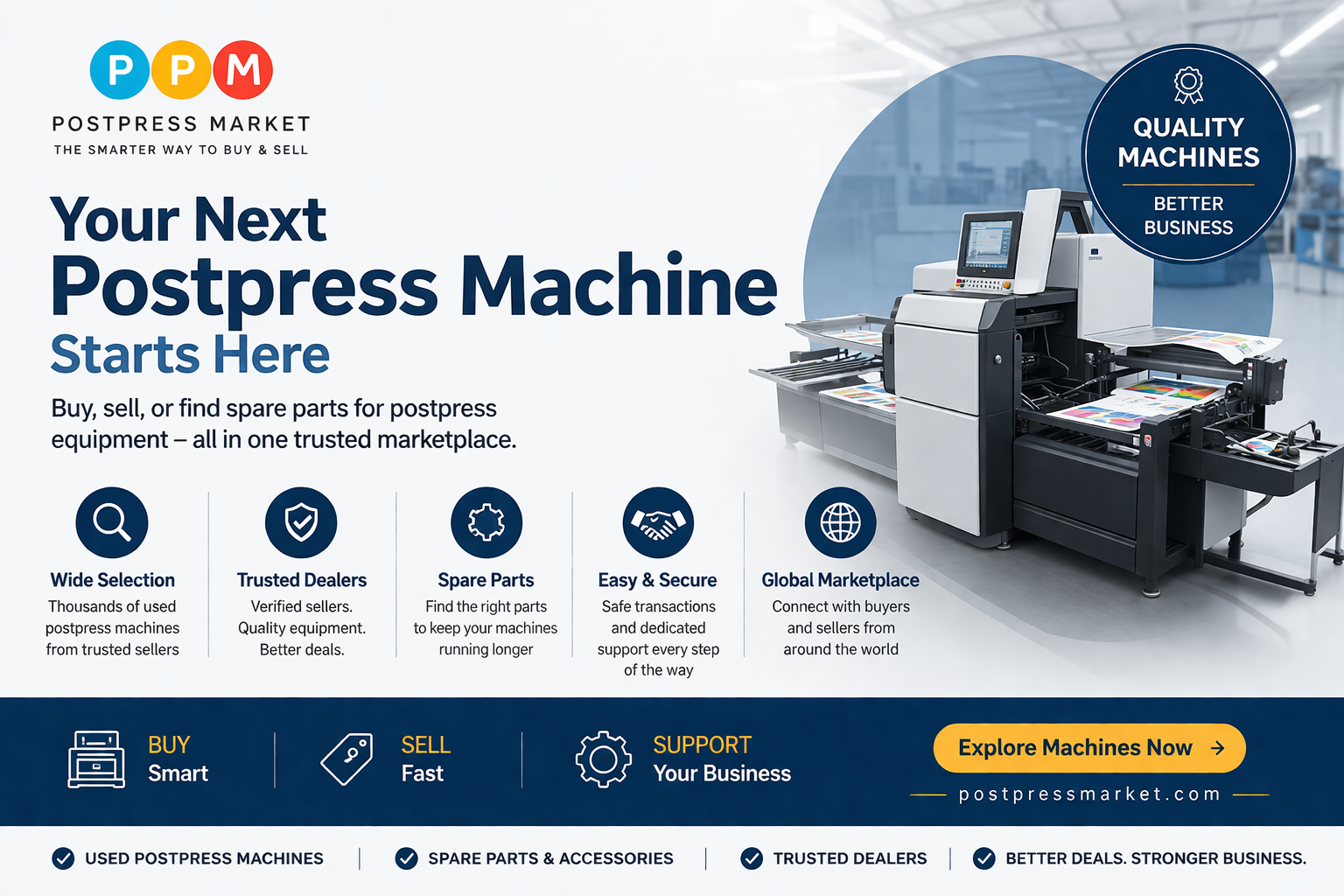
Magazine Finishing Equipment for Sale: A Professional Guide for Print and Postpress Operations
In the competitive printing and bindery sector, efficient magazine finishing equipment is essential for delivering high-quality, market-ready publications. Whether you are upgrading your finishing line, expanding capacity, or seeking reliable spare parts, understanding the nuances of magazine finishing machinery can significantly impact your operational efficiency and product quality. This guide provides an in-depth look at magazine finishing equipment available for sale, helping print shops, bindery operators, and production managers make informed purchasing decisions.
Understanding Magazine Finishing Equipment and Its Role
Magazine finishing equipment encompasses a range of machines designed to complete the postpress process for magazines and similar printed products. These machines typically perform tasks such as folding, gathering, stitching (saddle stitching), trimming, and sometimes binding or inserting additional materials. The goal is to transform printed sheets into professional, finished magazines ready for distribution.
Common types of magazine finishing machinery include:
- Folding machines: For precise folding of signatures or sheets into the desired format.
- Saddle stitchers: Machines that staple folded signatures along the spine.
- Trimmers: To cut the edges to uniform size and remove excess margins.
- Gathering systems: For assembling multiple signatures into complete magazines.
- Inserting machines: For adding inserts or supplements within the magazine.
Who Typically Seeks Magazine Finishing Equipment?
Professionals involved in magazine finishing equipment procurement include print shop owners, bindery managers, production supervisors, and equipment buyers. Businesses focused on high-volume magazine production or commercial printing frequently require reliable machines that integrate well into existing workflows. Additionally, dealers and service providers play a key role in sourcing and maintaining these machines.
Buyers may look for new or used equipment depending on budget constraints and production demands. Used machines can offer cost savings but require careful inspection and understanding of service history.
Key Factors to Consider Before Purchasing Magazine Finishing Machines
Acquiring magazine finishing equipment involves several considerations to ensure the machine fits your operational needs and minimizes downtime:
- Compatibility with production volume: Assess the machine’s throughput capacity relative to your print runs.
- Flexibility: Determine if the equipment can handle various magazine sizes, paper weights, and formats.
- Automation level: Higher automation can reduce labor costs but may increase complexity and maintenance.
- Condition and age (for used equipment): Examine wear components, service records, and potential need for spare parts.
- Brand and model reputation: Research reliability, availability of technical support, and spare parts supply.
- Integration capability: Ensure the machine can be incorporated smoothly into your existing finishing line.
- Service and dealer support: Confirm access to qualified technicians and warranty or service agreements.
Common Challenges and Troubleshooting in Magazine Finishing
Even with the best equipment, postpress operations can face issues that affect magazine quality and productivity. Typical problems include:
- Misfeeds or jams: Often caused by improper paper alignment, worn feed belts, or incorrect folding settings.
- Inconsistent stitching: May result from dull staples, incorrect staple size, or mechanical wear in the saddle stitching unit.
- Edge trimming inaccuracies: Could be due to dull blades or misaligned trimming guides.
- Machine downtime due to worn parts: Timely replacement of belts, blades, rollers, and electronic components is crucial.
Regular preventive maintenance, including cleaning, lubrication, and inspection of critical components, can reduce the frequency of these issues. When troubleshooting, consulting technical manuals or experienced service providers is often necessary to avoid costly mistakes.
Spare Parts Availability and Maintenance Considerations
Reliable access to genuine spare parts plays a pivotal role in maintaining magazine finishing equipment performance. Parts such as folding rollers, stitching heads, trimming blades, and electronic sensors may wear out over time and require replacement.
When evaluating equipment for purchase, consider:
- Manufacturer support: Availability of original parts and authorized service centers.
- Aftermarket parts: Quality and compatibility of third-party components.
- Ease of maintenance: Machines designed with accessible components and modular parts reduce repair time.
Establishing a maintenance schedule and training operators on routine checks can extend machine lifespan and prevent unexpected failures.
Comparing Machines and Where to Find Them for Sale
Marketplaces specializing in printing and postpress machinery offer a wide selection of magazine finishing equipment ranging from entry-level to high-end automated systems. When comparing machines, focus on:

- Technical specifications: Speed, format range, and automation features.
- Condition reports: Especially for used equipment, request detailed inspection reports or video demonstrations.
- Seller reputation: Verified dealers often provide better after-sale support and warranties.
- Price versus value: Consider total cost of ownership including installation, training, and maintenance.
Engaging with dealers and service providers through the marketplace can also facilitate access to professional advice and customized equipment solutions.
When to Seek Professional Dealer or Technical Support
Complex magazine finishing machines benefit from expert installation, calibration, and ongoing service. Consider dealer or manufacturer support when:
- Integrating new equipment into existing production lines.
- Upgrading software or automation modules.
- Facing persistent technical issues that cannot be resolved by in-house technicians.
- Requiring training for operators to optimize machine performance.
Professional support ensures minimal disruption and preserves machine value over time.
Frequently Asked Questions About Magazine Finishing Equipment
What should I prioritize when buying used magazine finishing equipment?
Focus on machine condition, availability of spare parts, and service history. Verify that the machine meets your production requirements and that technical support is accessible.
How often should maintenance be performed on finishing machines?
Maintenance frequency depends on usage intensity but typically includes daily cleaning, weekly lubrication, and scheduled inspections every few months to replace wear parts.
Can magazine finishing equipment handle different magazine sizes and paper weights?
Many modern machines offer adjustable settings for various formats, but confirm specifications before purchase to ensure compatibility with your product range.
Is automation necessary for small to mid-size print runs?
Automation improves efficiency and consistency but may not be cost-effective for low volumes. Manual or semi-automatic machines can be suitable depending on workload.
Conclusion
Investing in the right magazine finishing equipment is critical for print and postpress businesses aiming to deliver professional-quality magazines efficiently. By carefully evaluating machine capabilities, maintenance needs, and service support, buyers can optimize production workflows and reduce downtime. Utilizing specialized marketplaces to find equipment, spare parts, and dealer expertise streamlines the purchasing process and supports long-term operational success.
