
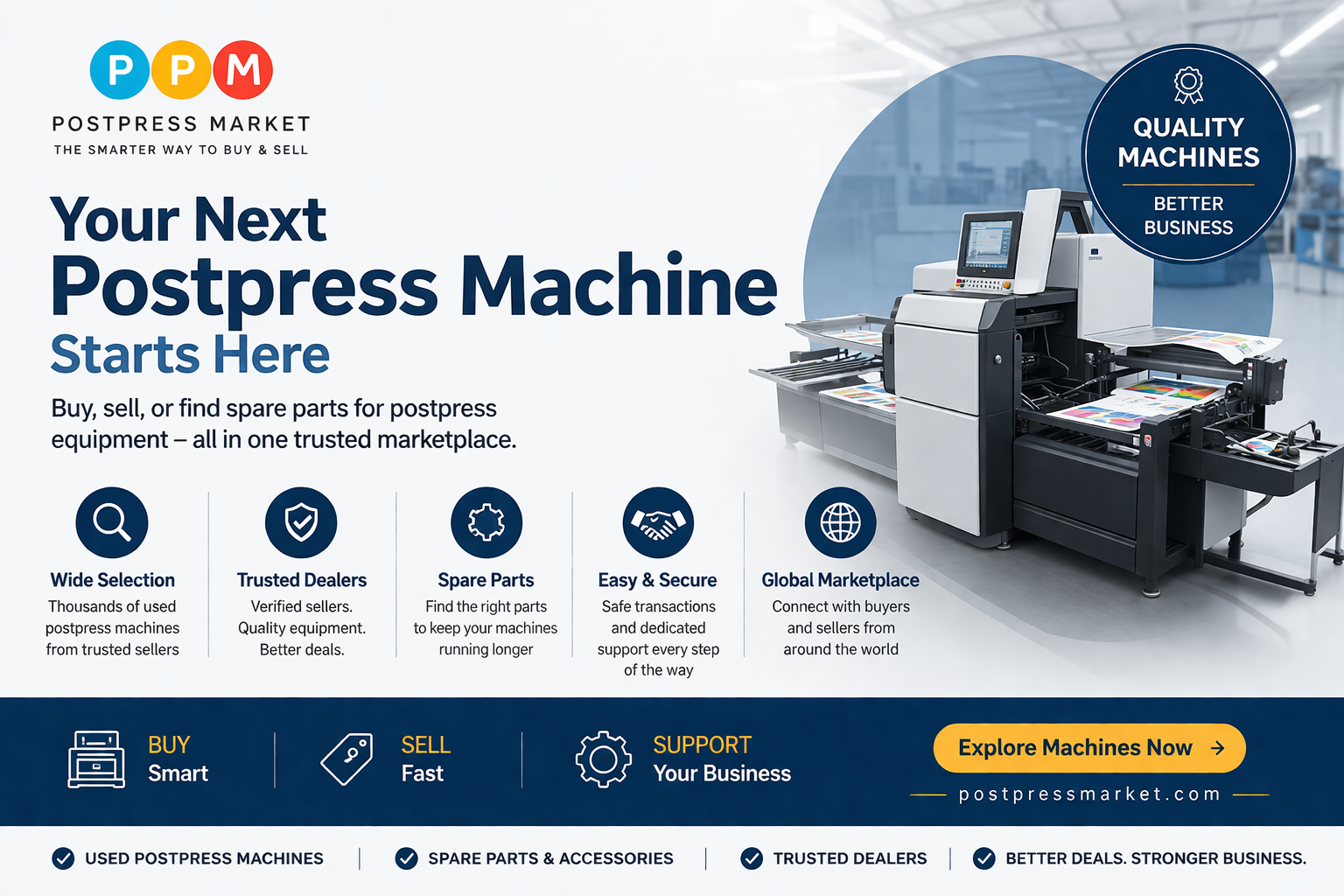
Buy and Sell New and Used Spare Parts for Printing and Postpress Equipment
In the printing and postpress industry, maintaining equipment uptime and operational efficiency is crucial. Whether you operate a print shop, bindery, or finishing facility, sourcing the right spare parts—new or used—is a key element in keeping your machinery running smoothly. This page guides you through buying and selling spare parts for printing and postpress machinery, helping you make informed decisions while navigating the marketplace.
Understanding Spare Parts in the Printing and Postpress Sector
Spare parts for printing and postpress equipment encompass a wide range of components, from rollers, blades, and belts to electronic controls, motors, and sensors. These parts are essential for machines such as digital presses, offset printers, folding machines, laminators, cutters, and binding systems. Availability of quality parts directly affects machine reliability and print production quality.
Businesses often face choices between purchasing new OEM (Original Equipment Manufacturer) parts or opting for used or refurbished components. Each option carries distinct advantages and considerations, which are important to evaluate before committing to a purchase or sale.
Key Factors When Buying New or Used Spare Parts
- Compatibility: Verify that the spare part matches the machine model, brand, and production year. Parts can vary significantly even within the same equipment line.
- Condition: New parts typically offer warranty coverage and longer service life, while used parts may provide cost savings but can have unknown wear or reduced durability.
- Source Reliability: Purchase from reputable dealers or verified sellers to avoid counterfeit or incompatible parts that might cause damage or downtime.
- Price vs. Value: Assess not only the upfront cost but also the expected lifespan and maintenance implications of the part.
- Availability: Some spare parts, especially for older or discontinued machines, may only be available as used or refurbished units.
Common Challenges When Selling Spare Parts
For suppliers or print shops looking to sell spare parts, understanding the market demand and clearly communicating part condition is essential. Common issues sellers encounter include:
- Properly identifying and describing parts to avoid mismatches and returns.
- Setting competitive pricing based on condition, rarity, and demand.
- Providing transparent information about wear, repairs, or refurbishments.
- Ensuring timely delivery and secure packaging to prevent damage during shipment.
Accurate listings and good customer support can enhance trust and repeat business in the specialized spare parts marketplace.
How to Evaluate Spare Parts Before Purchase
Before purchasing spare parts, especially used ones, consider the following steps to minimize risks:
- Request detailed photos and descriptions: Look for signs of wear, corrosion, or previous repairs.
- Check part numbers: Confirm that the part number matches your machine’s specification.
- Verify seller credentials: Prefer dealers or sellers with industry experience and positive feedback.
- Understand return policies: Know the conditions under which you can return or exchange parts.
- Consider professional inspection: When possible, have a technician examine used parts before installation.
Maintenance and Troubleshooting: The Role of Spare Parts
Regular maintenance and timely replacement of worn components prevent costly breakdowns. Common issues that often require spare parts replacement include:

- Roller or blanket wear causing print defects.
- Electrical component failure impacting machine control.
- Worn belts or gears leading to mechanical jams or speed inconsistencies.
- Blade dullness affecting cutting or trimming quality.
Being proactive in sourcing reliable spare parts can reduce downtime and extend machine service life. Buyers should also consider stocking critical components to handle urgent repairs.
When to Seek Dealer or Technical Support
While many spare parts can be installed in-house, complex repairs or troubleshooting often require professional expertise. Consider dealer or service provider assistance when:
- Parts require precise calibration or alignment after installation.
- Diagnosing issues that may involve multiple components or system-level faults.
- Warranty or service agreements are in place that necessitate authorized technicians.
- Dealing with proprietary or highly specialized equipment.
Authorized dealers may also provide access to genuine OEM parts and technical documentation, which can be critical for maintaining machine integrity.
Comparing New vs. Used Spare Parts: What Buyers Should Know
Deciding between new and used spare parts often depends on budget constraints, machine age, and operational priorities. Here are some comparison points:
- Cost: Used parts typically cost less upfront but may have shorter remaining service life.
- Reliability: New parts usually offer higher reliability and warranty coverage.
- Availability: Some legacy machines have limited new parts available, making used parts the only option.
- Performance: New OEM parts ensure optimal machine performance, whereas used parts may vary depending on condition.
- Lead Time: Used parts may be sourced faster in some cases, reducing downtime.
Balancing these factors with your operational needs will guide the best purchasing decision.
Frequently Asked Questions
- How can I be sure a used spare part will fit my machine?
Always verify the part number and consult machine manuals or service guides. When in doubt, consult with a dealer or technician. - Are refurbished parts a good alternative?
Refurbished parts that have been professionally restored can offer a middle ground between new and used parts, providing reliability at a lower cost. - Can I install spare parts myself?
Simple components can often be replaced in-house, but complex parts may require expert installation to avoid damage or voiding warranties. - Where can I find trustworthy dealers or spare parts suppliers?
Industry-specific marketplaces and dealer networks specializing in printing and postpress equipment are reliable sources to explore. - What should I do if a spare part fails shortly after installation?
Contact the seller promptly to understand warranty options or return policies. In some cases, professional troubleshooting might identify installation issues.
