
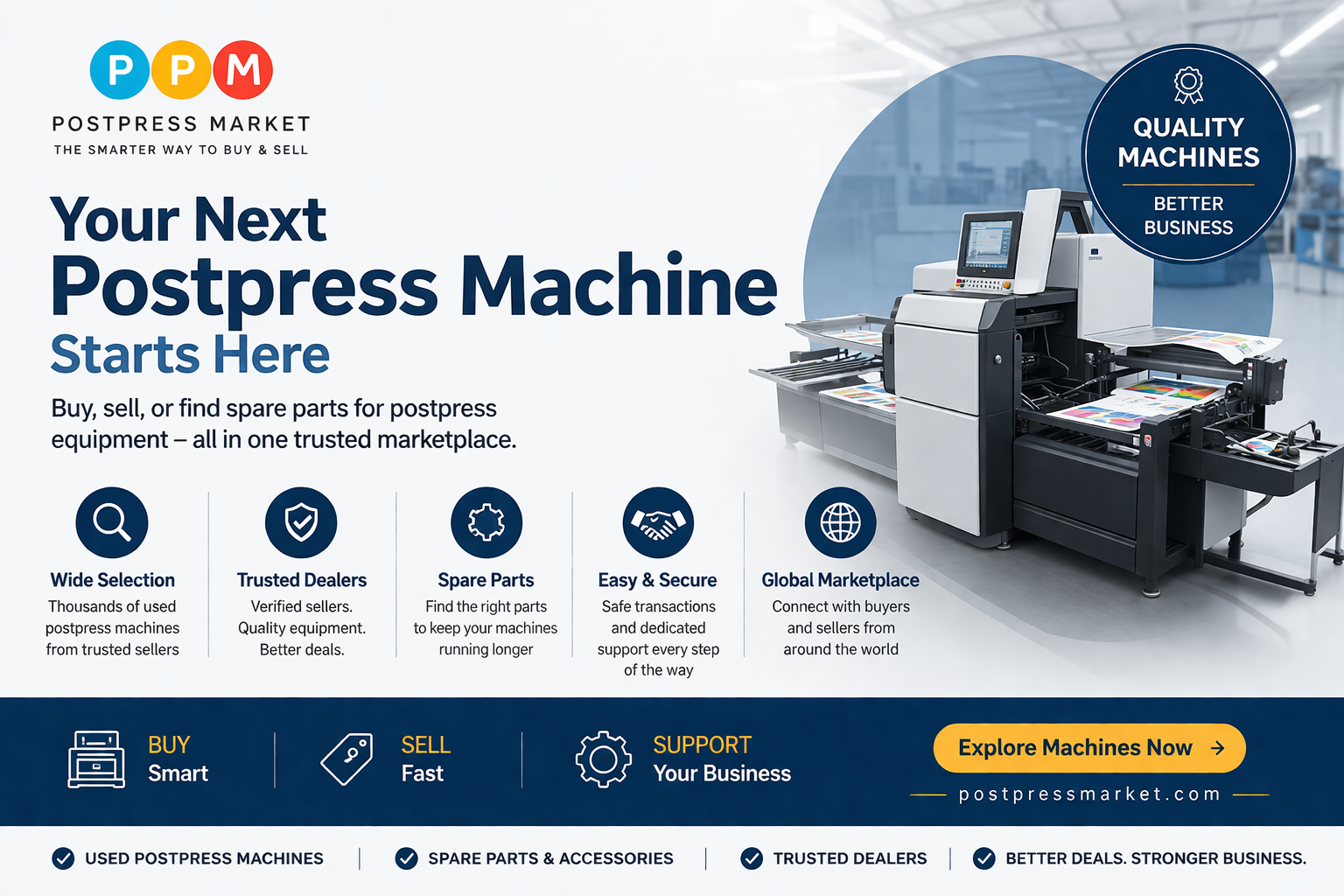
Industrial Postpress Machines for Sale: A Professional Guide for Printing and Bindery Businesses
Industrial postpress machines are essential components in any professional print finishing operation. These machines perform critical tasks such as folding, cutting, binding, laminating, and embossing, transforming printed sheets into finished products ready for distribution. Whether you are a print shop, bindery, or production manager evaluating options for expanding capacity or replacing outdated equipment, understanding the nuances of industrial postpress machinery is vital to making informed buying decisions.
Understanding Industrial Postpress Equipment and Its Applications
Postpress machines encompass a wide range of finishing equipment used after the printing process. Common types include:
- Folding machines: For creating precise folds in brochures, booklets, and flyers.
- Cutting and trimming machines: To size printed materials accurately and remove excess edges.
- Binding machines: Including perfect binders, saddle stitchers, and wire-o binders for assembling books and catalogs.
- Laminators and coating machines: To enhance durability and aesthetics of printed materials.
- Embossing and die-cutting machines: For adding tactile or decorative effects.
These machines are typically found in commercial print shops, bindery operations, and packaging facilities. The choice of equipment depends largely on the type of finishing required, production volume, and material specifications.
Key Considerations When Buying Industrial Postpress Machines
Purchasing industrial postpress machinery requires careful evaluation to ensure the equipment aligns with your operational needs. Here are critical factors to assess before making a purchase:
- Machine compatibility: Verify that the machine supports the range of substrates, sizes, and formats you work with.
- Production capacity: Assess throughput rates and cycle times to match your volume requirements.
- Automation level: Consider whether manual, semi-automatic, or fully automatic machines best suit your workflow.
- Age and condition (for used machines): Evaluate wear, maintenance history, and potential need for spare parts or repairs.
- Brand reputation and dealer support: Reliable manufacturers and accessible service networks can reduce downtime risks.
- Integration capabilities: Ensure the machine can integrate with existing equipment or production lines if needed.
Comparing machines based on these criteria helps avoid costly mistakes and ensures a smoother implementation into your production environment.
Common Challenges and Troubleshooting in Postpress Machinery
Even high-quality industrial postpress machines can encounter operational issues. Understanding common problems can aid in selecting equipment with robust designs and planning for maintenance.
- Paper jams and misfeeds: Often caused by improper settings, worn rollers, or unsuitable stock weight.
- Inconsistent folds or cuts: Can result from dull blades, misaligned guides, or mechanical wear.
- Binding defects: Such as weak adhesion or loose staples, frequently linked to incorrect glue temperature or faulty stitching heads.
- Electrical or control system faults: Especially in older machines, requiring expert diagnostics.
Routine maintenance, including cleaning, lubrication, and timely replacement of consumables, is essential to minimize downtime. Having access to genuine spare parts and skilled technicians is crucial for effective troubleshooting and repair.
Finding Spare Parts and Service Support for Postpress Equipment
One of the most important aspects of owning industrial postpress machinery is ensuring continuous operational reliability. This hinges on the availability of spare parts and professional service support.
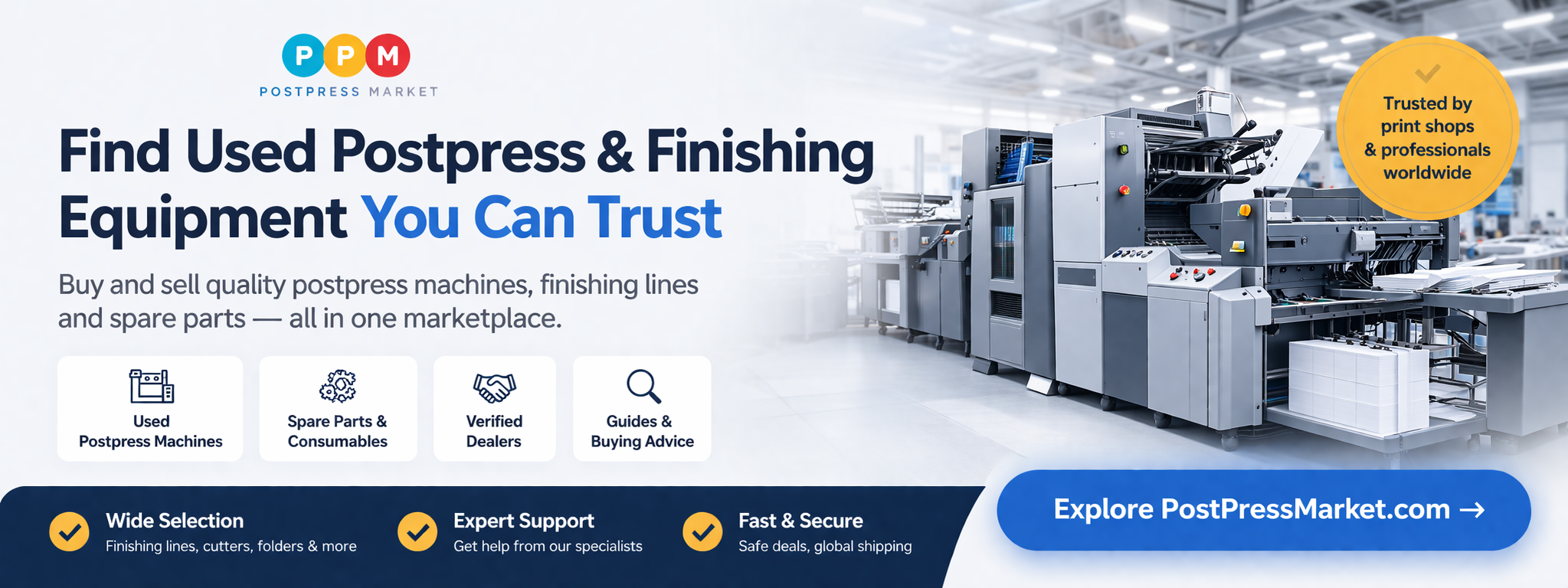
When sourcing machines, especially used equipment, verify the availability of critical components such as blades, belts, rollers, glue pots, and electronic modules. Machines from well-established brands tend to have better parts availability through authorized dealers and aftermarket suppliers.
Additionally, consider whether dealer networks or specialized service providers offer maintenance contracts, emergency repairs, and technical training. Partnering with experienced service technicians can extend machine life and optimize performance.
Comparing New Versus Used Industrial Postpress Machines
Deciding between new and used postpress equipment involves weighing upfront costs against long-term operational considerations.
- New machines: Offer the latest technology, warranty coverage, and often improved energy efficiency. They may include automation features and software integration that enhance productivity.
- Used machines: Provide cost savings and quicker availability but require thorough inspection. Assess the machine’s condition, maintenance history, and potential refurbishment needs. Confirm the availability of spare parts and technical support.
Many businesses find value in certified pre-owned machines from reputable dealers, which combine reduced cost with some assurance of quality and service.
How to Locate Reliable Dealers and Marketplaces for Postpress Equipment
Finding trustworthy sellers and service providers is crucial when buying industrial postpress machinery. Industry-specific marketplaces and dealer networks offer a centralized platform to browse available machines, compare specifications, and review seller reputations.
When searching for dealers or service partners, prioritize those who:
- Specialize in printing and postpress equipment.
- Provide detailed machine documentation and transparent condition reports.
- Offer after-sales support, including installation, training, and maintenance.
- Have access to genuine spare parts and technical expertise.
Engaging with such partners reduces risk and facilitates smoother transactions.
Frequently Asked Questions About Industrial Postpress Machines
- What should I inspect before buying a used postpress machine?
Check mechanical condition, wear on consumables, electrical controls, maintenance records, and test run performance if possible. - How important is dealer support for postpress equipment?
Dealer support is critical for troubleshooting, obtaining spare parts, and ensuring machine longevity. - Can postpress machines be integrated into automated production lines?
Many modern machines offer connectivity features for seamless integration, but compatibility should be confirmed case-by-case. - What maintenance routines are essential for postpress machinery?
Regular cleaning, lubrication, blade sharpening or replacement, and inspection of moving parts help maintain optimal function. - Are there financing options available for purchasing industrial postpress machines?
Financing depends on the dealer or marketplace policies; some offer leasing or installment plans tailored to business needs.
Industrial postpress machines represent a significant investment that directly impacts production efficiency and output quality. Taking the time to carefully evaluate options, understand maintenance demands, and work with reliable dealers ensures your finishing operations remain competitive and profitable.
