
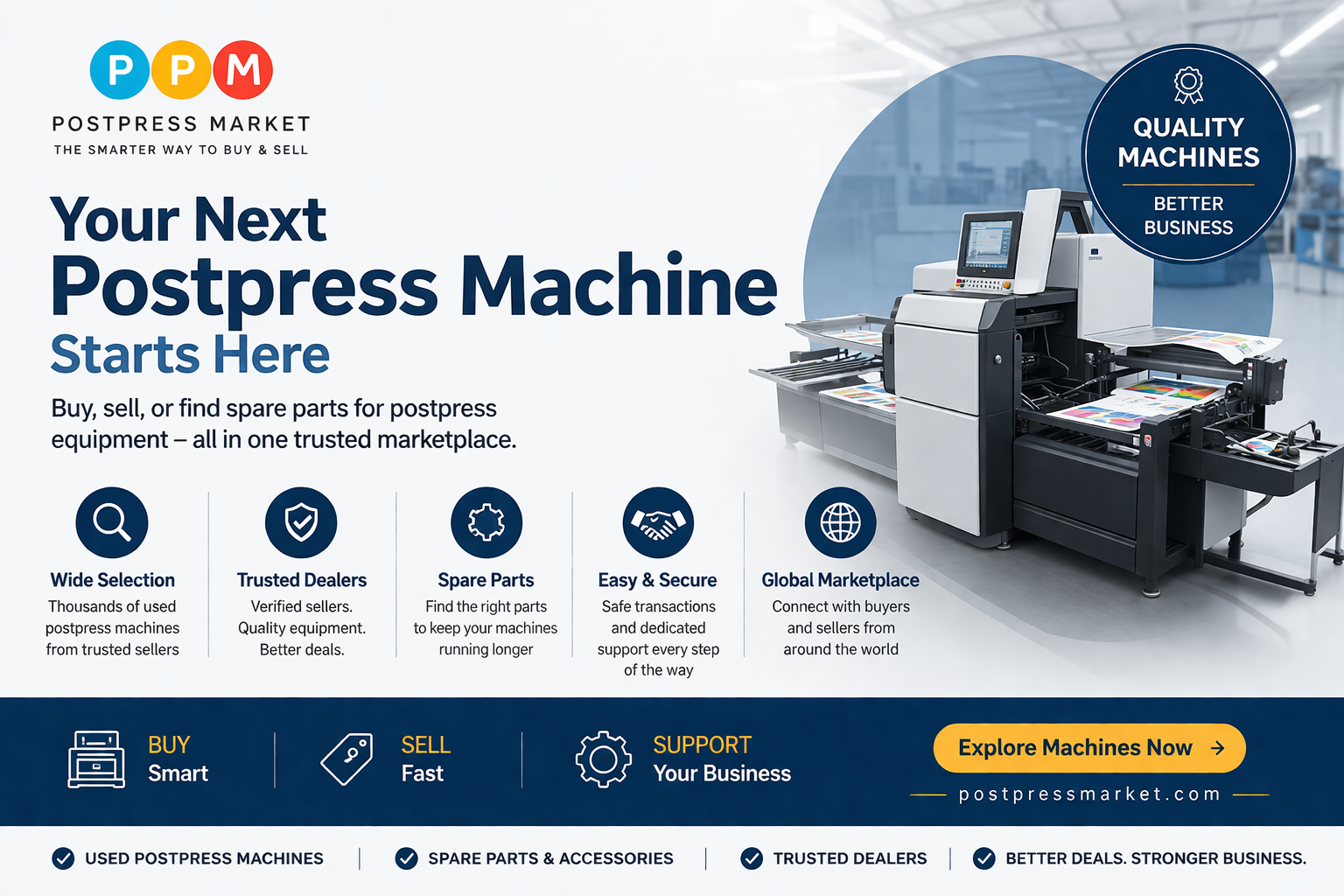
Industrial Printing Equipment Listings: A Comprehensive Guide for Buyers and Sellers
In the competitive printing and postpress industry, sourcing reliable industrial printing equipment is crucial for maintaining production efficiency and quality. Whether you are looking to buy new or used printing machinery, sell your existing equipment, or find essential spare parts, understanding the marketplace and key considerations can streamline your decision-making process. This guide focuses on industrial printing equipment listings, helping print shops, bindery operators, production managers, and equipment dealers navigate the complexities involved in acquiring or selling printing machinery.
Understanding Industrial Printing Equipment and Its Applications
Industrial printing equipment encompasses a broad range of machinery designed for high-volume printing and finishing operations. These machines include offset presses, digital printers, flexographic presses, screen printers, and postpress equipment such as folders, cutters, laminators, and binding machines. Each type serves specific production needs, from commercial print runs to packaging or specialized finishing.
Typically, these machines are used in environments demanding consistent output, precision, and minimal downtime. Production managers and equipment buyers prioritize machines that align with their workflow, substrate types, and print volume requirements.
Key Factors to Evaluate When Reviewing Equipment Listings
When browsing industrial printing equipment listings, buyers should assess several critical elements to ensure the machine meets operational expectations and budget constraints:
- Machine Condition and Age: Understand the operational history, maintenance records, and any refurbishments. Older machines may be cost-effective but could require more frequent repairs.
- Brand and Model Reputation: Industry-standard brands often provide better reliability, parts availability, and technical support.
- Compatibility with Production Needs: Check whether the machine supports the substrates, formats, and print volumes typical for your production.
- Included Accessories and Attachments: Some listings may include feeders, dryers, or finishing components that add value or increase complexity.
- Spare Parts Availability: Verify the availability of replacement parts, especially for older or less common models, to avoid extended downtime.
- Service and Dealer Support: Access to authorized dealers or service providers can be critical for troubleshooting and maintenance.
Common Challenges When Buying or Selling Industrial Printing Equipment
Both buyers and sellers face challenges that can affect transaction outcomes and long-term satisfaction:
- Overlooking Hidden Repair Costs: Machines may appear functional but require costly repairs or calibration that are not immediately apparent.
- Insufficient Technical Information: Listings lacking detailed specifications or service history complicate risk assessment.
- Misjudging Equipment Compatibility: Purchasing equipment without verifying integration with existing workflows or software can cause operational bottlenecks.
- Limited Spare Parts Supply: Some machines, especially discontinued models, may have scarce spare parts, impacting maintenance efficiency.
- Underestimating Installation and Training Needs: Complex machines often require expert installation and operator training, which should be factored into the purchase plan.
How to Effectively Compare Industrial Printing Machinery Listings
To make informed purchasing decisions, compare listings based on these commercially relevant criteria:
- Price Versus Condition: Balance the upfront cost with machine condition and expected lifespan.
- Operational Capacity: Match machine speed, sheet size, and job flexibility with your production demands.
- Energy Efficiency and Running Costs: Consider machines with lower energy consumption and maintenance expenses.
- Dealer Support and Warranty Options: Favor listings offering some form of warranty or post-sale service agreements.
- Upgrade and Retrofit Potential: Machines that can be upgraded or retrofitted to new technologies may provide better long-term value.
Maintenance and Spare Parts Considerations in the Buying Process
Maintenance plays a pivotal role in the lifecycle of industrial printing equipment. Buyers should inquire about the machine’s service history and the availability of critical spare parts such as rollers, belts, cylinders, sensors, or electronic components. Reliable access to genuine parts can significantly reduce downtime and repair costs.
Furthermore, establishing a relationship with authorized dealers or certified service providers ensures access to professional maintenance, troubleshooting, and repair services. This support network is especially important when dealing with complex machinery that requires specialized knowledge.
When to Seek Professional Assistance or Dealer Support
Not all buyers have the technical expertise to evaluate industrial printing equipment thoroughly. Engaging with equipment dealers or technical service providers can offer several advantages:
- Technical Inspections: Professionals can perform detailed machine assessments to identify hidden issues.
- Installation and Setup: Expert installation ensures the equipment is calibrated and integrated correctly.
- Operator Training: Training services improve operator efficiency and reduce the risk of machine misuse.
- After-Sales Support: Ongoing service agreements help maintain machine performance and extend operational life.
Frequently Asked Questions About Industrial Printing Equipment Listings
- What should I verify before purchasing used printing equipment?
Confirm the machine’s operational condition, service history, availability of spare parts, and whether any warranties or guarantees are offered. - Is it better to buy new or used industrial printing machines?
New machines offer the latest technology and warranties but come at a higher cost. Used machines can be cost-effective but require careful inspection and consideration of maintenance needs. - How important is dealer support when buying industrial printing equipment?
Dealer support can be critical for installation, troubleshooting, spare parts supply, and ongoing maintenance, reducing downtime and operational risks. - Can I find spare parts for older or discontinued machines?
Availability varies by brand and model. It is essential to verify parts availability before purchase to avoid operational interruptions. - What common issues should I watch for during equipment inspection?
Look for signs of excessive wear, leaks, electrical faults, misalignment, and any unusual noises during operation.
