
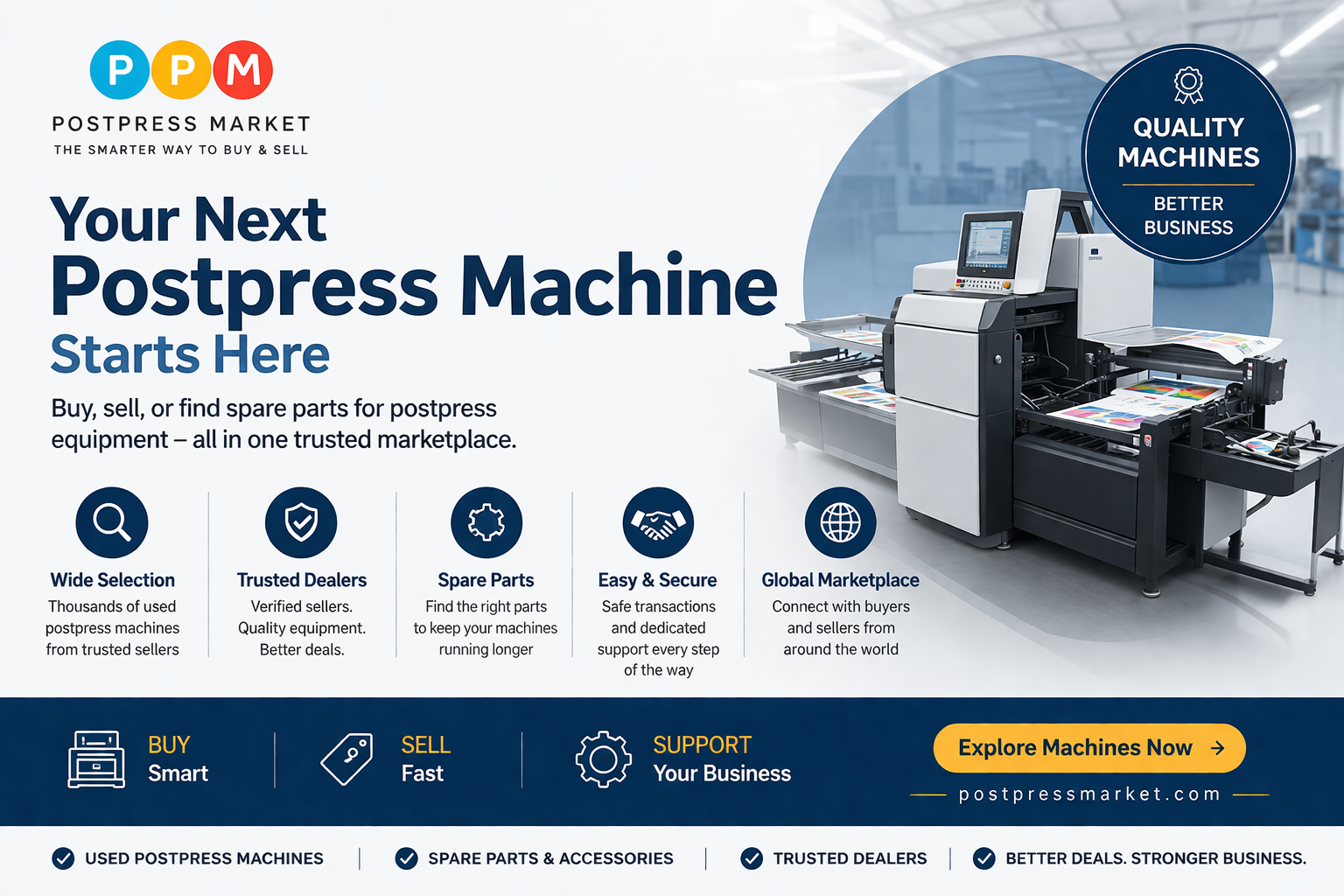
Printing Industry Marketplace: Connecting Buyers and Sellers of Printing and Postpress Equipment
In the dynamic printing industry, sourcing the right machinery, spare parts, and technical services is critical to maintaining production efficiency and meeting quality standards. A specialized printing industry marketplace serves as a centralized platform where print shops, bindery operators, equipment dealers, and maintenance professionals can buy, sell, and compare new and used printing and postpress equipment. This page outlines how such a marketplace supports informed decision-making, streamlines equipment acquisition, and facilitates access to essential spare parts and service resources.
Understanding the Printing Industry Marketplace
A printing industry marketplace focuses on the niche needs of printing and finishing operations. It typically includes listings for offset and digital printing presses, bindery machines such as folders and cutters, laminators, coating units, and other postpress equipment. Additionally, the marketplace offers spare parts, consumables, and access to technical service providers. This specialized environment caters to the unique requirements of production managers, equipment buyers, and technicians who demand reliability and compatibility in their machinery and components.
Who Benefits from Using a Printing Equipment Marketplace?
The marketplace serves a broad spectrum of industry professionals, including:
- Print Shop Owners and Production Managers: Seeking to upgrade or expand their machinery with minimal downtime.
- Bindery and Finishing Operators: Looking for specialized postpress equipment or replacement parts to maintain workflow.
- Equipment Dealers and Resellers: Displaying inventory of used or new printing machines to a targeted audience.
- Technicians and Maintenance Teams: Searching for authentic spare parts and reliable service providers.
Key Considerations When Buying Printing or Postpress Equipment
Purchasing printing machinery through a marketplace requires careful evaluation to ensure the equipment aligns with production needs and budget constraints. Important factors include:
- Machine Condition and Age: Verify the operational status, maintenance history, and any refurbishment details for used equipment.
- Compatibility with Existing Workflow: Ensure the new machine integrates smoothly with current production lines and software controls.
- Availability of Spare Parts: Confirm that replacement parts are readily accessible to avoid prolonged downtime.
- Technical Support and Dealer Network: Consider sellers or dealers offering after-sales service and installation assistance.
- Machine Specifications and Capabilities: Compare print speeds, formats, substrate compatibility, and finishing options relevant to your operations.
Comparing Equipment Options: New Versus Used
Marketplace listings commonly feature both new and pre-owned printing and postpress machinery. Each option carries distinct advantages and trade-offs:
- New Equipment: Offers the latest technology, warranty coverage, and potentially lower maintenance initially, but comes at a higher upfront cost.
- Used Equipment: Typically more affordable and may provide quick availability; however, buyers should assess the machine’s condition carefully and consider potential refurbishment expenses.
Utilizing the marketplace to compare multiple listings side-by-side helps buyers weigh these factors and select equipment that balances cost and performance.
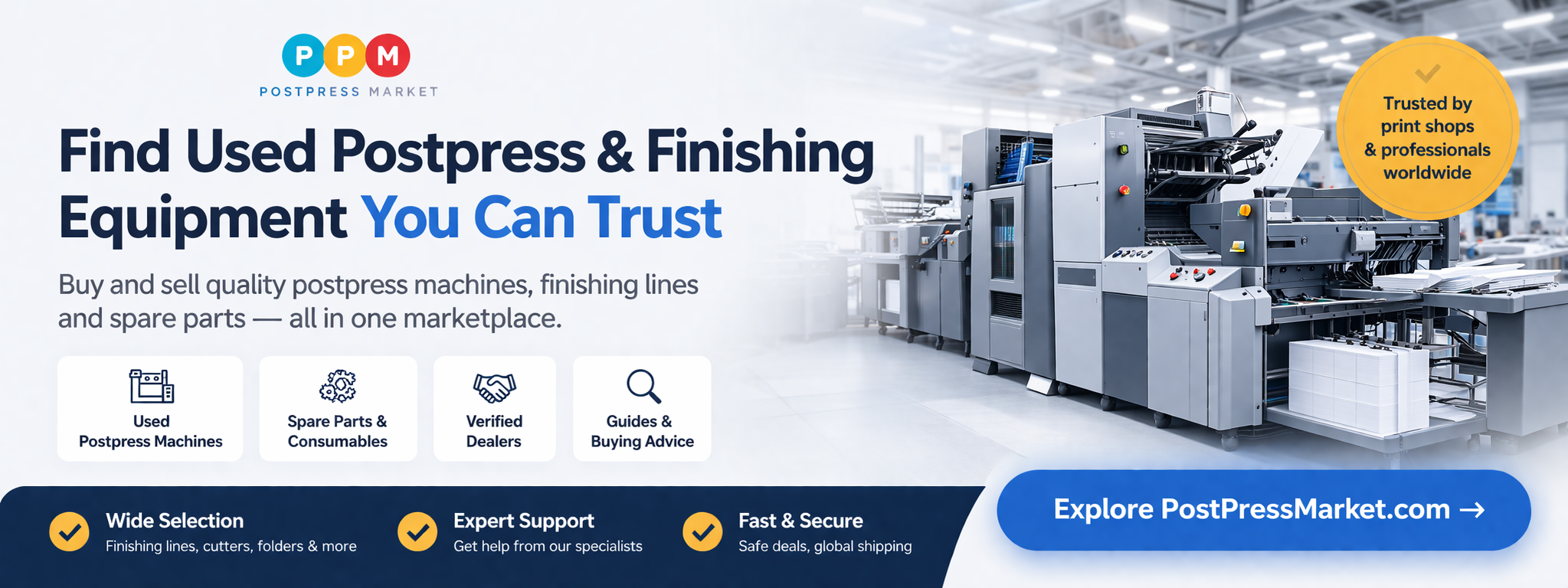
Finding Spare Parts and Consumables Through the Marketplace
Reliable access to spare parts is crucial for minimizing production interruptions. The marketplace often provides a dedicated section for components such as:
- Replacement rollers, blades, and belts
- Electrical and electronic modules
- Printing plates and blankets
- Consumables like inks and adhesives
Buyers should verify part compatibility with their specific machine models and check seller credibility to ensure genuine quality parts. Some marketplaces also list refurbished parts, which can be a cost-effective alternative when new components are expensive or have long lead times.
Maintenance and Troubleshooting Support Available on the Marketplace
Beyond buying and selling, many printing industry marketplaces connect users with technical service providers specializing in machine maintenance and repair. This support network is invaluable for addressing common operational issues such as:
- Print quality inconsistencies
- Mechanical wear and tear
- Electrical faults or sensor failures
- Software and control system glitches
Locating qualified technicians or authorized dealers through the marketplace can expedite troubleshooting and preserve equipment longevity. Some listings may also include maintenance service contracts or preventive care packages tailored to specific machine types.
Common Pitfalls to Avoid When Using a Printing Industry Marketplace
While marketplaces offer convenience and access, buyers and sellers should be mindful of potential risks:
- Insufficient Documentation: Avoid transactions without clear machine specifications, maintenance records, or proof of ownership.
- Overlooking Compatibility: Confirm that spare parts or machines match your existing equipment to prevent costly mismatches.
- Ignoring After-Sales Support: Prioritize sellers who provide installation, training, or repair services to safeguard your investment.
- Underestimating Shipping and Installation Costs: Factor in logistics expenses, especially for large or heavy machinery.
Frequently Asked Questions About Printing Industry Marketplaces
- Can I find both new and used equipment in the marketplace?
Yes, most printing industry marketplaces list a range of new and pre-owned machines to accommodate different budget and production needs. - How do I verify the condition of used printing equipment?
Request detailed photos, maintenance records, and, if possible, arrange an in-person inspection or video demonstration prior to purchase. - Are spare parts guaranteed to fit my machine model?
Always confirm part numbers and compatibility with your machine’s make and model. Reputable sellers typically provide this information upfront. - Is technical support available through the marketplace?
Many marketplaces feature listings for authorized dealers and service providers who can assist with installation, repair, and maintenance. - What payment and shipping options are common?
Payment terms and shipping arrangements vary by seller; clarify these details before completing any transaction to avoid surprises.
