
Where to Find Postpress Machine Advice for Printing Professionals
Postpress equipment plays a critical role in the finishing stages of print production, impacting both efficiency and final product quality. Whether you operate a print shop, manage bindery operations, or oversee production lines, finding reliable advice on postpress machines is crucial. From selecting the right equipment to troubleshooting and maintenance, expert guidance helps ensure smooth operations and protects your investment.
Understanding Postpress Machines and Their Applications
Postpress machines encompass a wide range of finishing equipment such as cutting, folding, binding, laminating, and embossing devices. These machines are used to transform printed sheets into finished products like brochures, books, packaging, and promotional materials. Depending on your production volume and product types, you may need specialized postpress equipment tailored for specific tasks and substrates.
Professionals looking for advice often seek clarity on the differences between machine types, compatibility with existing workflow, and how to optimize production speed and quality. Knowing what machines are typically used for various finishing processes is the first step in making informed decisions.
Common Challenges When Sourcing Postpress Machine Advice
One of the main difficulties in obtaining useful postpress machine advice lies in the diversity of equipment and brands available. Buyers and operators must navigate:
- Technical complexity: Different machines have varying levels of automation, control systems, and required operator skill.
- Compatibility issues: Ensuring a new machine integrates smoothly with existing print and finishing lines.
- Spare parts availability: Access to replacement parts can vary widely by brand and machine age, affecting uptime.
- Maintenance and repair considerations: Understanding the typical wear points and service intervals to avoid unexpected downtime.
- Cost versus performance: Balancing upfront investment with long-term operational savings.
These factors make it essential to seek advice that is not only technically accurate but also commercially relevant.
Where Printing and Postpress Professionals Typically Seek Machine Advice
Finding trustworthy and detailed postpress machine advice usually involves multiple sources, each offering unique benefits depending on the nature of the inquiry:
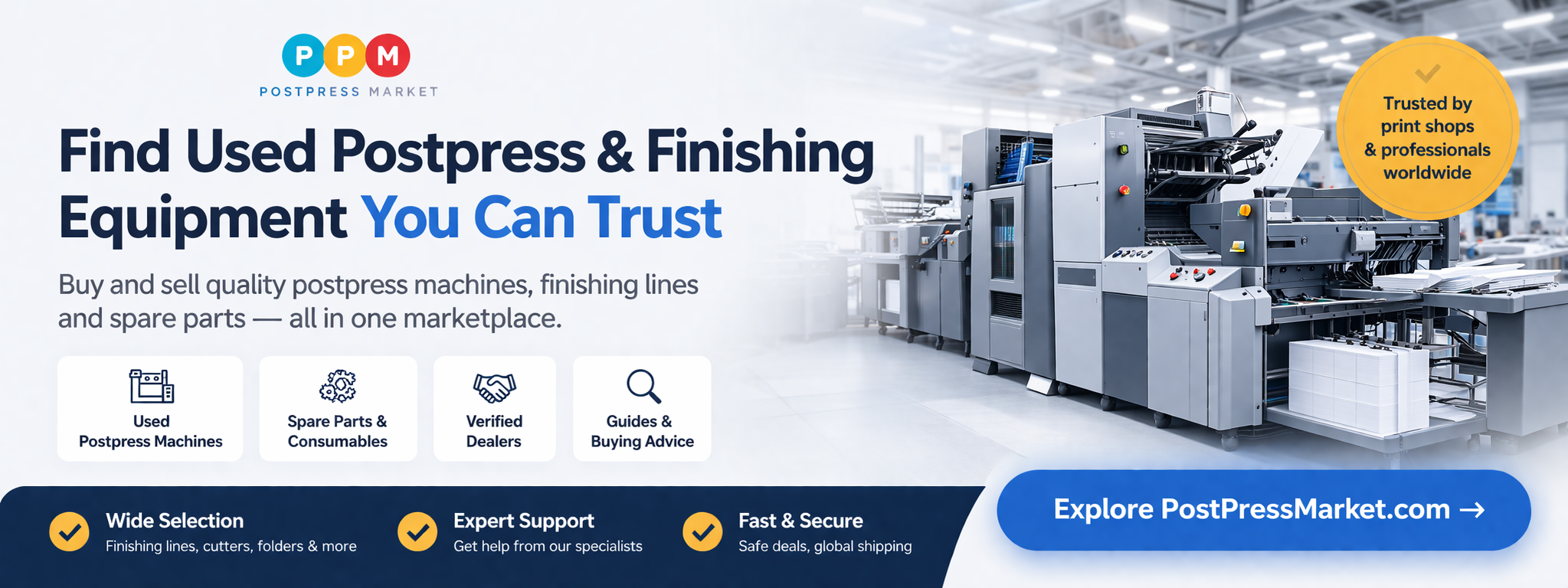
- Industry-specific marketplaces: Online platforms dedicated to printing and finishing equipment provide listings of new and used machines, spare parts, and services. These marketplaces often include detailed product descriptions, seller ratings, and user reviews that help evaluate machine condition and vendor reliability.
- Authorized dealers and manufacturers: Direct contact with brand representatives or certified dealers is invaluable for technical specifications, warranty information, and genuine spare parts sourcing. Dealers can also offer tailored recommendations based on production needs.
- Technical forums and professional networks: Peer-to-peer discussions allow operators and technicians to share firsthand experiences, troubleshooting tips, and maintenance advice. These communities often highlight common issues and practical solutions.
- Trade shows and industry events: Exhibitions focused on printing and postpress technologies provide hands-on opportunities to compare equipment, attend demonstrations, and consult experts face-to-face.
- Service providers and equipment specialists: Independent service companies offering machine maintenance and repair can provide insights into typical failure modes, upgrade options, and cost-effective upkeep strategies.
Key Factors to Verify When Consulting Postpress Machine Advice
Before acting on any advice or making equipment decisions, printing professionals should critically assess the following points:
- Machine condition and history: For used equipment, verify operational status, maintenance records, and any past repairs.
- Spare parts support: Confirm availability and lead times for critical components to minimize downtime risks.
- Operator training requirements: Understand the skill level needed and whether training resources are provided or available.
- Compatibility with existing production lines: Check if the machine’s specifications match your workflow, including size, speed, and substrate handling.
- After-sales service and warranty: Reliable support can be a decisive factor, especially for complex or high-value postpress machinery.
- Cost of ownership: Include not only purchase price but also expected maintenance, consumables, and energy consumption.
How to Use Marketplace Platforms for Postpress Machine Advice
Online marketplaces tailored to the printing industry serve as centralized hubs for buying, selling, and researching postpress equipment. Here’s how they can aid your decision-making process:
- Compare multiple listings: Browse different machines side-by-side to evaluate features, conditions, and prices.
- Access detailed product information: Listings often include machine specifications, photos, and operational videos.
- Connect directly with sellers and dealers: Ask specific questions about machine history, service records, and compatibility.
- Find spare parts and accessories: Search for OEM and aftermarket parts to ensure smooth maintenance and repairs.
- Locate qualified service providers: Marketplaces may feature listings for technicians and maintenance companies specializing in particular equipment brands.
Using these platforms efficiently helps reduce risks associated with equipment purchases and supports ongoing production reliability.
When to Consult Professional Support for Postpress Machines
Even with abundant information available, certain situations warrant direct professional assistance:
- Complex troubleshooting: When machines exhibit recurring faults or operational inconsistencies that in-house teams cannot resolve.
- Installation and integration: Setting up new equipment to work seamlessly within existing production lines often requires expert involvement.
- Routine maintenance planning: Service providers can help develop preventive maintenance schedules tailored to your machine models.
- Upgrades and retrofits: Professionals can advise on modernization options to extend machine life or improve performance.
- Warranty and repair claims: Navigating manufacturer support processes is smoother with authorized service partners.
Engaging qualified technicians and dealers ensures your postpress machinery operates at peak efficiency and minimizes costly downtime.
Frequently Asked Questions About Postpress Machine Advice
- Q: How do I determine if a used postpress machine is worth buying?
A: Assess the machine’s operational condition, maintenance history, availability of spare parts, and compatibility with your workflow. Consulting with a technical expert or dealer can provide valuable insights. - Q: Where can I find trustworthy spare parts for older postpress equipment?
A: Authorized dealers, specialized marketplaces, and independent parts suppliers focused on printing machinery are good sources. Verify part authenticity and compatibility before purchase. - Q: What are common signs that a postpress machine needs professional maintenance?
A: Increased downtime, inconsistent finishing quality, unusual noises, or error codes often indicate the need for expert service. - Q: Can I rely solely on online forums for postpress machine troubleshooting?
A: While forums provide valuable peer advice, complex issues or warranty-covered repairs should be handled by qualified technicians. - Q: How important is dealer support when buying new postpress equipment?
A: Dealer support is critical for installation, training, spare parts access, and ongoing maintenance, significantly impacting machine uptime and ROI.
